
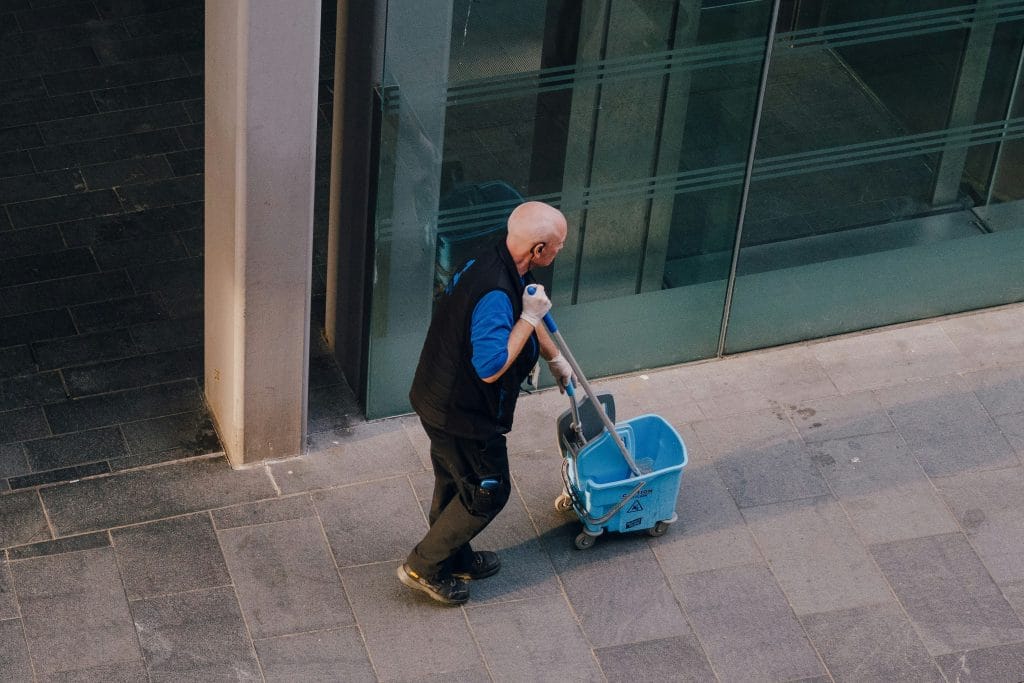
What Does a Day Porter Do?
A day porter is an on-site cleaning professional who keeps a commercial building clean, safe and presentable during normal business hours.
Unlike an evening janitorial crew that performs most of its work after a building has closed, a day porter responds to cleaning and facility needs as they happen.
They may clean an unexpected spill, restock a restroom, remove overflowing trash, maintain a lobby or prepare a meeting room before visitors arrive.
The exact responsibilities depend on the property, but the purpose remains the same: keep the facility functioning and looking its best throughout the day.
Day porters commonly work in:
- Office buildings
- Medical facilities
- Schools
- Retail centers
- Apartment communities
- Corporate campuses
- Industrial facilities
- Government buildings
- Hotels and hospitality properties
- High-traffic public spaces
For properties with employees, customers, patients or residents moving through them all day, a day porter can become one of the most visible and valuable members of the facility team.
Quick Answer: What Does a Day Porter Do?
A day porter handles ongoing cleaning, restocking and light facility-support tasks while a commercial property is occupied.
Typical day porter duties include:
- Inspecting and cleaning restrooms
- Restocking paper products and soap
- Cleaning entrances and lobbies
- Responding to spills
- Removing trash and recycling
- Maintaining break rooms
- Wiping high-touch surfaces
- Spot-cleaning glass
- Monitoring common areas
- Setting up meeting or event spaces
- Reporting maintenance concerns
- Helping keep walkways clean and safe
A day porter does not necessarily replace a nighttime janitorial crew. In many buildings, the two services work together.
The evening crew performs the detailed cleaning. The day porter protects that work and maintains the building until the next full cleaning.
Day Porter Duties and Responsibilities
A day porter’s scope of work should be customized to the property. However, most day porter services include several core responsibilities.
Restroom Cleaning and Restocking
Restrooms can quickly become a problem in a busy facility.
A day porter periodically checks restrooms throughout the day and addresses issues before employees, tenants or visitors complain.
This may include:
- Wiping counters and fixtures
- Cleaning mirrors
- Spot-cleaning floors
- Disinfecting high-touch areas
- Emptying waste containers
- Restocking toilet paper
- Refilling paper towels and soap
- Reporting plumbing problems
The porter may not perform a complete restroom cleaning every hour. Instead, the goal is to keep the space consistently usable and presentable between deeper cleanings.
Lobby and Entrance Maintenance
The entrance creates the first impression of a property.
Rain, snow, mud, leaves, fingerprints and heavy foot traffic can make a clean entrance look neglected within minutes.
A day porter can maintain:
- Entry doors
- Interior glass
- Floor mats
- Reception areas
- Lobby furniture
- Elevator interiors
- Walkways near the entrance
- High-touch surfaces
This is especially important for offices, medical buildings, dealerships, hotels and other properties that frequently receive visitors.
Spill and Emergency Response
Spills do not wait for the evening cleaning crew.
A day porter can respond quickly to water, coffee, food, dirt and other unexpected messes. Prompt cleanup improves appearance and can reduce the risk of slips and falls.
The porter can also place warning signs, secure the area and notify building management when a situation requires maintenance or specialized attention.
Trash and Recycling
Overflowing trash can make an otherwise clean facility feel poorly managed.
A day porter monitors high-use waste containers and removes trash before it creates odors or becomes visible to visitors.
Common areas include:
- Break rooms
- Conference rooms
- Restrooms
- Reception areas
- Outdoor entrances
- Food-service spaces
- Copy and mail rooms
Break Room and Kitchen Upkeep
Shared kitchens often need attention more than once per day.
A day porter may wipe counters, clean sinks, remove trash, spot-clean appliances and address spills. The porter can also restock supplies when those responsibilities are included in the scope.
This helps keep common areas usable without requiring employees to manage cleaning problems themselves.
High-Touch Surface Cleaning
Door handles, elevator buttons, railings and shared counters are touched repeatedly throughout the day.
A day porter can routinely clean these surfaces based on the facility’s traffic level and requirements.
The porter’s schedule should prioritize the areas that matter most rather than treating every surface the same.
Meeting and Event Support
Some day porters assist with light room setup and cleanup.
This can include:
- Arranging chairs
- Wiping tables
- Removing trash
- Resetting meeting rooms
- Cleaning after catered events
- Preparing shared spaces for visitors
These tasks should be defined in advance so the porter’s cleaning responsibilities remain the priority.
Light Exterior Maintenance
Depending on the property, a day porter may also maintain visible exterior areas.
Possible duties include:
- Picking up litter
- Emptying exterior waste containers
- Sweeping entryways
- Cleaning smoking areas
- Straightening outdoor furniture
- Reporting ice, water or trip hazards
Landscaping, snow removal and technical maintenance are normally separate services unless specifically included.
Day Porter vs. Janitor: What Is the Difference?
The biggest difference between a day porter and a traditional janitor is when and how the work is performed.
A day porter usually works while the building is occupied. Their job is to provide visible, ongoing support and respond to immediate needs.
A janitorial crew commonly works after hours and completes scheduled cleaning tasks throughout the building.
| Day Porter | Evening Janitorial Crew |
|---|---|
| Works during business hours | Usually works after business hours |
| Responds to immediate issues | Completes a scheduled scope |
| Maintains high-traffic areas | Cleans the full assigned facility |
| Frequently interacts with occupants | Usually works with fewer people present |
| Performs ongoing touch-ups | Performs more detailed cleaning |
| Reports visible facility concerns | Focuses primarily on cleaning duties |
Many properties need both.
The janitorial crew resets the facility each evening, while the day porter helps preserve that standard during operating hours.
How Much Does a Day Porter Cost?
Professional day porter services are commonly priced by the hour or through a fixed monthly service agreement.
A general planning range is approximately $20 to $40 per porter hour, although some providers and higher-cost markets charge more. Current commercial-cleaning pricing guides show wider hourly rates depending on geography, supervision, scope, insurance requirements and facility type.
The final price may include more than the employee’s hourly wage. A professional service provider may also be responsible for:
- Payroll taxes
- Workers’ compensation
- Liability insurance
- Recruiting
- Background checks
- Training
- Uniforms
- Management
- Quality inspections
- Replacement coverage
- Cleaning chemicals
- Equipment
- Administrative expenses
The Bureau of Labor Statistics reported a median hourly wage of $17.27 for janitors and building cleaners in May 2024. The price billed to a facility is normally higher than the worker’s wage because the provider must cover employment and operating costs.
Example Day Porter Monthly Costs
The examples below are planning estimates rather than guaranteed quotes.
Two Hours Per Day
Two hours per weekday equals approximately 40 to 44 porter hours per month.
At $25 to $40 per hour, the estimated monthly cost would be approximately:
$1,000 to $1,760 per month
This schedule may work for a smaller office that primarily needs restroom checks, trash removal and midday common-area attention.
Four Hours Per Day
Four hours per weekday equals approximately 80 to 88 porter hours per month.
At $25 to $40 per hour, the estimated monthly cost would be approximately:
$2,000 to $3,520 per month
This arrangement can work well for a medium-sized building with steady daytime traffic.
Eight Hours Per Day
Eight hours per weekday equals approximately 160 to 176 porter hours per month.
At $25 to $40 per hour, the estimated monthly cost would be approximately:
$4,000 to $7,040 per month
A full-time day porter may be appropriate for a large property, busy medical facility, corporate campus or multi-tenant office building.
What Determines Day Porter Pricing?
There is no universal day porter price because each facility requires a different amount of labor and support.
The most important pricing factors include the following.
Number of Service Hours
The weekly schedule is usually the largest pricing factor.
A facility that needs a porter for two hours each morning will pay substantially less than a property that requires continuous eight-hour coverage.
Property Type
A quiet administrative office does not have the same needs as a medical facility, school or busy retail center.
Buildings with heavier traffic, stricter cleaning requirements or more frequent incidents generally require more labor and training.
Scope of Work
Pricing increases when the porter is responsible for a larger or more complex scope.
For example, exterior litter removal, conference-room setup, multiple restroom inspections and service across several floors may require more time than basic lobby maintenance.
Geographic Location
Labor costs, taxes, insurance and operating expenses differ by city and state.
Day porter services in expensive metropolitan areas will generally cost more than comparable service in lower-cost markets.
Supplies and Equipment
The agreement should clarify who provides chemicals, consumable products and equipment.
Some cleaning companies include basic tools and chemicals. Paper towels, soap, toilet paper and other building consumables may be billed separately.
Supervision and Replacement Coverage
A professional provider should have a plan for training, inspecting and replacing the assigned porter when needed.
The lowest hourly quote may not include dependable management or replacement coverage. That can leave the property without service when the regular porter is absent.
Security and Screening Requirements
Medical offices, schools, government properties and other sensitive environments may require background checks, identification badges, specialized training or additional documentation.
These requirements can affect the total cost.
When Does a Building Need a Day Porter?
A facility may benefit from a day porter when cleaning problems regularly occur between scheduled janitorial visits.
Common signs include:
- Restrooms frequently run out of supplies
- Trash becomes full before the end of the day
- The lobby quickly looks dirty after opening
- Employees are asked to clean shared areas
- Spills remain unattended
- Customers regularly visit the property
- Building management receives repeated cleaning complaints
- High-traffic areas need constant attention
- Events or meetings create additional cleanup
- The nighttime crew cannot maintain the building by itself
A day porter is particularly valuable when the appearance of the facility directly affects the customer, tenant, patient or employee experience.
Benefits of Hiring a Day Porter
A Better First Impression
A clean lobby, stocked restroom and orderly common area communicate that a property is professionally managed.
The day porter protects that impression throughout the day.
Faster Response to Problems
Instead of waiting until the evening, the facility has someone available to address many cleaning concerns immediately.
Fewer Employee Distractions
Employees should not have to empty trash, clean spills or search for restroom supplies.
A porter allows the staff to focus on their actual responsibilities.
Consistent Facility Appearance
A building can be cleaned thoroughly at night and still look neglected by noon.
A day porter maintains the standard between scheduled cleanings.
Additional Eyes on the Property
A reliable porter becomes familiar with the building and can report leaks, damaged fixtures, safety concerns and unusual conditions.
The porter does not replace a building engineer, but they can identify visible problems early.
Support for the Evening Crew
By addressing trash, spills and high-traffic spaces during the day, the porter allows the evening janitorial team to focus on detailed cleaning.
Should You Hire a Day Porter or Outsource a Janitorial Service?
A facility can hire a porter directly or contract with a commercial cleaning company.
Hiring directly may provide more control over the employee’s daily schedule. However, the facility also becomes responsible for recruiting, screening, payroll, training, supervision and absence coverage.
Outsourcing may provide:
- Professional recruiting
- Background screening
- Training
- Workers’ compensation coverage
- Liability insurance
- Cleaning equipment
- Chemicals
- Quality inspections
- Management support
- Replacement coverage
The best option depends on the size of the facility, internal management capacity and required level of oversight.
How to Choose a Day Porter Service
Before selecting a provider, ask the following questions:
- What duties are included in the proposed scope?
- How many porter hours does the facility actually need?
- Who supervises and inspects the porter?
- What happens when the assigned porter is absent?
- Are background checks performed?
- Are chemicals and equipment included?
- Who supplies restroom consumables?
- How are additional service requests approved?
- Is the agreement hourly or fixed monthly?
- Can the schedule change as the property’s needs change?
- Is the provider properly insured?
- How are complaints and service issues documented?
The provider should walk the property before recommending a final schedule.
A good day porter plan is based on traffic patterns, restroom use, common areas, building hours and actual operational needs—not square footage alone.
How Many Day Porter Hours Does Your Building Need?
There is no single formula, but these ranges can provide a starting point.
Light Coverage: One to Two Hours Per Day
May work for:
- Small professional offices
- Buildings with limited visitor traffic
- Facilities that only need midday restroom and common-area checks
Partial-Day Coverage: Three to Five Hours Per Day
May work for:
- Medium-sized offices
- Multi-tenant buildings
- Medical offices
- Properties with regular customers or visitors
Full-Day Coverage: Six to Eight Hours Per Day
May work for:
- Corporate campuses
- Large office buildings
- Busy medical facilities
- Shopping centers
- Schools
- High-traffic public properties
Some large facilities require multiple porters or staggered shifts.
The right schedule should be determined after reviewing when and where the building experiences the most activity.
Frequently Asked Questions About Day Porters
Is a day porter the same as a janitor?
Not exactly. A day porter generally provides ongoing cleaning and facility support while a building is occupied. A janitorial crew often performs more comprehensive cleaning after business hours.
What are the main duties of a day porter?
Common duties include restroom checks, supply restocking, trash removal, spill response, lobby maintenance, break-room cleaning and high-touch surface cleaning.
Does a day porter perform maintenance?
A day porter may complete minor nontechnical tasks and report maintenance concerns. Electrical, plumbing, HVAC and other skilled repairs should normally be handled by qualified maintenance professionals.
Does a day porter clean restrooms?
Yes. Restroom inspection, touch-up cleaning and supply restocking are among the most common day porter responsibilities.
How much does a day porter cost?
Day porter pricing varies by market, schedule and scope. A broad planning range is approximately $20 to $40 per service hour, with higher pricing possible in expensive markets or specialized facilities.
Does a day porter replace nightly janitorial service?
Usually not. A porter maintains the facility during operating hours, while an evening crew completes deeper and more comprehensive cleaning.
Can a day porter work part time?
Yes. Many facilities schedule a porter for two to five hours per day rather than hiring full-day coverage.
Who provides the day porter’s supplies?
That depends on the service agreement. The cleaning provider may supply chemicals and equipment, while the building purchases paper products and other consumables.
What types of buildings use day porters?
Office buildings, schools, medical facilities, shopping centers, apartment communities, industrial properties and corporate campuses frequently use day porter services.
Find Day Porter and Commercial Cleaning Providers
The right day porter program should be built around the way a property actually operates.
Before hiring a provider, define the building’s highest-traffic areas, busiest hours, recurring concerns and expected service standards. Then request a written scope that clearly identifies the porter’s schedule, duties, supervision and included supplies.
Explore the DayPorter commercial cleaning directory to find janitorial companies, facility-service providers, equipment companies and industry resources.
A dependable day porter does more than clean during the day. They help protect the appearance, safety and daily operation of the entire facility.